
The European Music Market: Opportunities and Challenges on the Global Stage
Europe's music market is at a key moment, with major opportunities for expansion but also significant challenges due to the rapid growth of other regions such as the Americas and Asia. The recent report by IFPI (International Federation of the Phonographic Industry), titled Music in the EU: A Global Opportunity, highlights how the European music industry faces fierce global competition and how European Union policymakers can play a fundamental role in strengthening it. This analysis comes at a crucial moment, when technology, streaming platforms and artificial intelligence are transforming how artists connect with their audiences.
The European Union's Role in Global Music
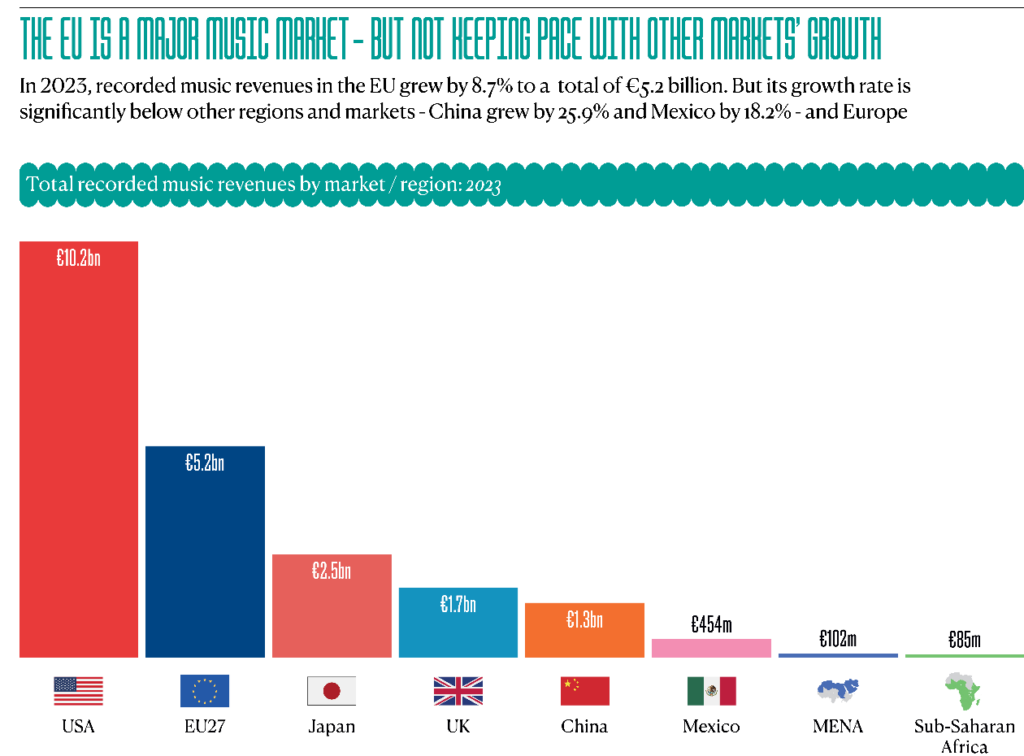
The report reveals that recorded music revenues in the EU reached €5,200 million in 2023, positioning Europe as a key player in the global industry, ahead of markets such as Japan, the United Kingdom and China. However, when adjusted for inflation, current revenues represent only 61% of those earned in 2001, a reminder that the market has yet to regain its full potential.
Despite this decline, Europe remains a hotbed of talent, with local artists accounting for 60% of the best-selling artists in European markets. On the global market, however, European artists face a significant challenge, as musicians from the United States and Latin America dominate international charts, forcing European creators to redouble their efforts to stay competitive.
Investment and Economic Growth
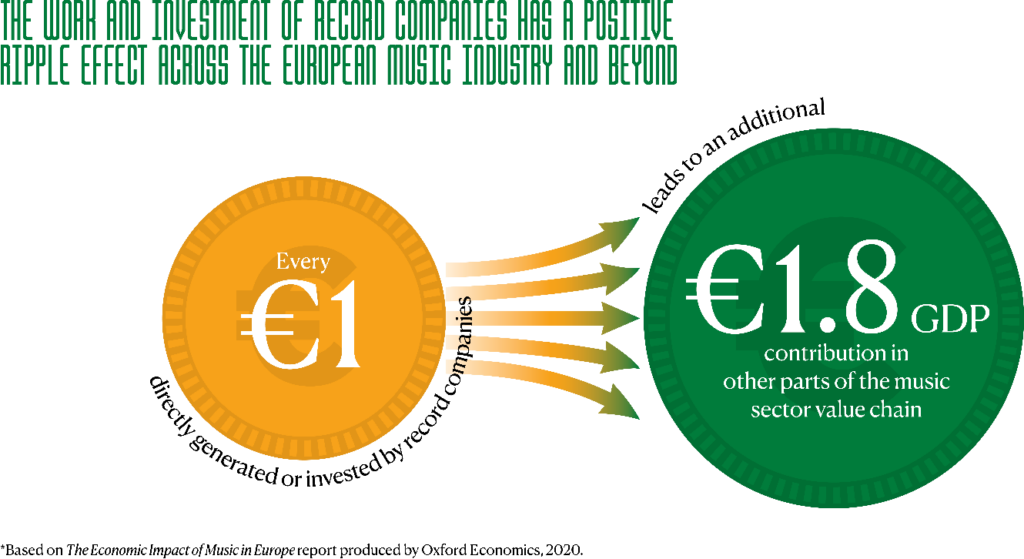
A key point in the report is the positive economic impact generated by record label investment across the European music sector's entire value chain. Every euro invested by the music industry generates an additional €1.80 in the economy, highlighting the multiplier effect of this investment on European GDP. This ripple effect not only strengthens the sector but also benefits other related markets such as technology, tourism and entertainment, reinforcing music's role in Europe's economic growth.
The Role of Policymakers in the Future of Music
The IFPI report emphasises that European institutions have a key role in securing the future of music in the region. Its most important recommendations include the need to:
- Protect the digital single market: Ensure that the music industry in the EU can grow without regulatory obstacles or technological barriers, enabling dynamic development across the continent.
- Support intellectual property: Curb the unauthorised use of music content in artificial intelligence development and ensure that copyright regulations are properly enforced.
- Develop responsible and ethical AI: Ensure that technological innovation respects creators' rights, protecting the creativity and originality of European artists.
Spain's Music Market: A Key Player in Europe
Within Europe, Spain has established itself as one of the most dynamic markets with the strongest international prospects. Artists such as Rosalía, C. Tangana and Aitana have taken Spanish music to new heights, reaching global audiences and standing out on international platforms such as Spotify and YouTube.
The IFPI report highlights how Spain's music industry, supported by record labels and streaming platforms, has maintained steady growth. The country has successfully capitalised on its local talent, with a 60% chart success rate for domestic artists, a figure that rivals other European markets.
However, Spain also faces challenges similar to those affecting the rest of the EU. With competition from emerging markets such as Latin America and the dominance of US artists, the country must continue investing in technological innovation and protecting its creators' rights. Support from European institutions and a stronger digital single market are key to ensuring that Spain remains a global leader in music.
A Crucial Moment for Music in Europe
These figures make it clear that European music is at a turning point. Although there are significant challenges in the global market, the industry has a unique opportunity to consolidate its leadership if the necessary steps are taken to protect creators and encourage innovation.
At MusicAdders, we are committed to supporting European artists and labels on their path to global success, helping them maximise their potential through digital distribution and promotional strategies that position them in the competitive international market. Music in Europe has a bright future, and now is the time to seize all the opportunities this new digital landscape offers.